My last game project, Airships: Lost Flotilla, didn't do very well. It's a nice game with good reviews, but after revenue share and fixed marketing and translation costs, I made about USD 8000 for more than a year's work.
I did a postmortem process for the development, and determined that one big problem was a lack of strong interest by anyone. People liked the game but no one was truly excited about it. And you need excitement to shift copies. I know this from my previous game, Airships: Conquer the Skies: most people are put off by a 2D strategy game with a lot of detail and buttons, but for some people, it's exactly what they want and can't get somewhere else.
So for my next game, I wanted to pick a concept that would provoke strong interest in at least some people. I actually have a lot more game ideas than I have time to make them in, so it made sense to pick the one with the most immediate traction.
Gathering Ideas and Initial Validation
I help run a game development co-working space in Zurich called the Swiss Game Hub. We've had a lot of conversations in our community about how to validate game ideas. In particular, Metaroot, who had handled the marketing for Airships: Lost Flotilla, were also very interested in figuring out a process to validate ideas. We discussed this at length and came up with the following process.
I compiled a list of twelve ideas and wrote short descriptions for each of them, of the style you might get at the top of a Steam page. I then created a questionnaire asking respondents to pick the two ideas from the list they liked the most, and sent it to three groups of people: other devs at our local game hub, a small set of content creators, and the Airships community on Discord.
- Planet Flipper - Buy planets, fix planets, sell planets, profit. A hypercapitalist half-assed terraforming game.
- Biomechanoid Repair Shop - Repair strange and mundane device-beasts in your carefully laid out workshop. Until things go wrong.
- UFO: City Destroyer - Destroy human society with your flying saucer through abductions and mind control. Experiment on people, replace politicians with robots, poison the water supply. Cackle maniacally as you prepare the way for invasion.
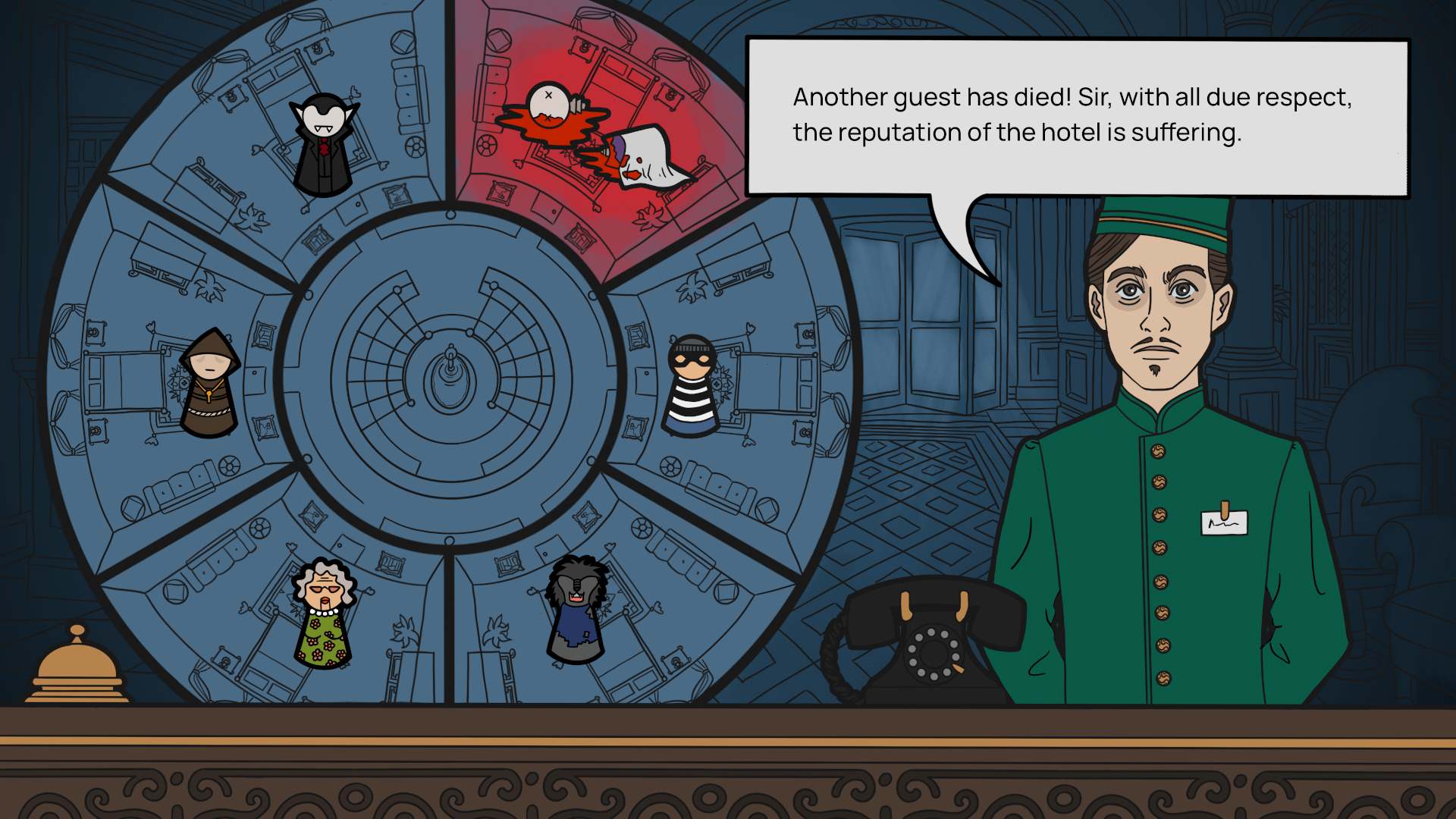
- Airships: Murder on the Sky Express - As the concierge of the world's unluckiest hotel, assign the right rooms to your guests to keep them from killing each other.
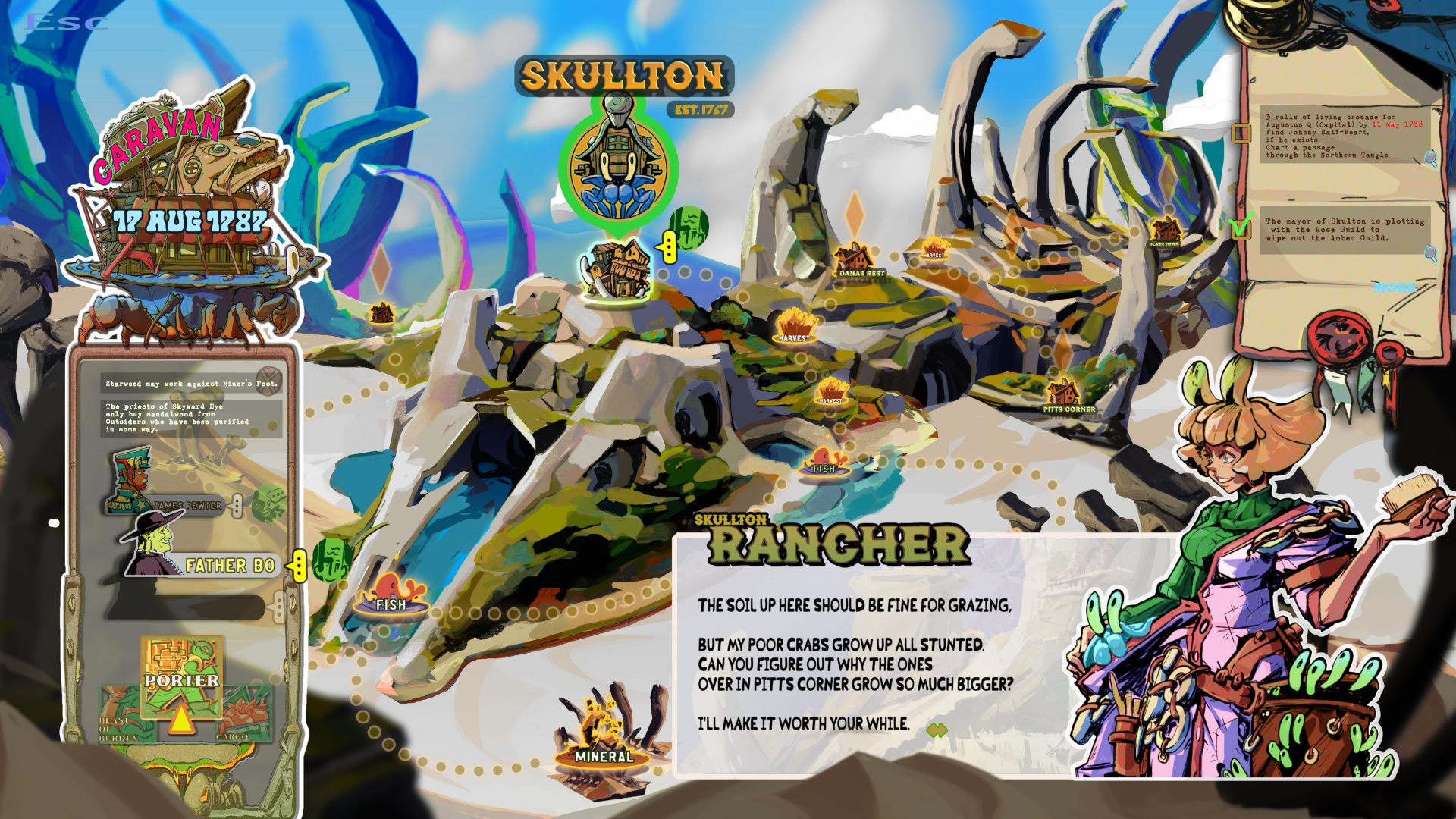
- Bonescape - The discovery of a vast and verdant skeleton has spurred colonization and trade. Travel, trade, and adventure across a developing bonescape.
- Corvus Sector - Build a great galactic empire in 100 turns in a minimalist space strategy game.
- Airships: Merchant Princes - Build the fortunes of a trading family and the steampunk city they live in.
- The Waterloo Rift - After Napoleon's magics tore a hole in reality at Waterloo, portals to strange realities opened across the world. Send out expeditions across a hex map to find resources, knowledge and allies to give your nation an edge in the next war.
- Epsilon Eridani - Survive on an alien planet and vie for control of humanity's first extrasolar colony in this turn-based strategy game.
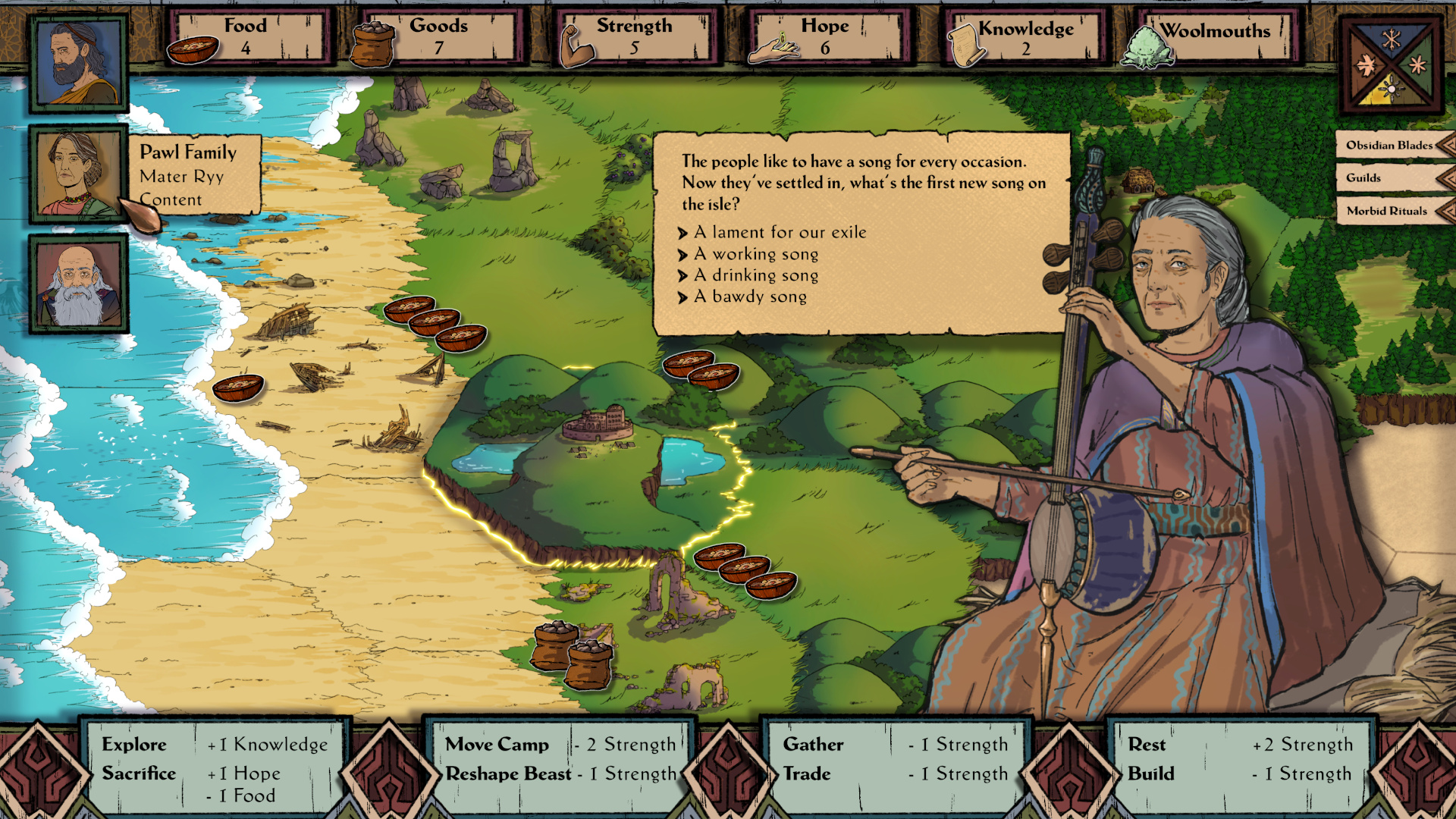
- Isle of Beasts - Your people were banished to the Isle of Beasts. Now you must survive and rebuild your society - but in what shape? A narrative strategy game.
- Cabin in the Woods - Tactics game where four hapless students must survive seven nights in a remote cabin. Rest, forage and repair in the day, evade the monsters invading your cabin at night, each lasting five turns.
- City Destroyer - Stalk the night and defend the wilderness with night-time raids, well-placed assassinations, and magic in this anti-city-builder.
The results were pretty different between these groups. In the Airships discord, unsurprisingly, the Airships-branded one did really well, as did anything strategy or steampunk related. The content creators, on the other hand, evaluated games on the basis of what would look interesting on screen, which makes sense, giving first place to Planet Flipper. The other developers also liked Planet Flipper as well as City Destroyer.
These were less than clear results, so I went back over the ideas and discussed them with other experienced devs. I eliminated a number of them because they would have been hard to make or had unsolved design problems: Epsilon Eridani, Airships: Merchant Princes, Corvus Sector, The Waterloo Rift, and Cabin in the Woods.
I also did some follow-up individual interviews with respondents where it became clear that everyone imagined something different for City Destroyer. It's a nice high-level concept but people were imagining anything from a first person shooter to a turn-based strategy game. I didn't have a strong vision for how to do it either, so I eliminated it. (Of course all these ideas can be revisited. Perhaps they need tweaking or cross-fertilization or a really convincing prototype.)
The interviews also showed that everyone imagined Planet Flipper to display the planets as rotating globes.
Creating Mockups
I now had six game ideas left. Given that people had very different ideas of the games, just a text description was clearly not sufficient. Typically, the first thing you see from a game is a screenshot, and your decision to take a closer look is heavily based on that.
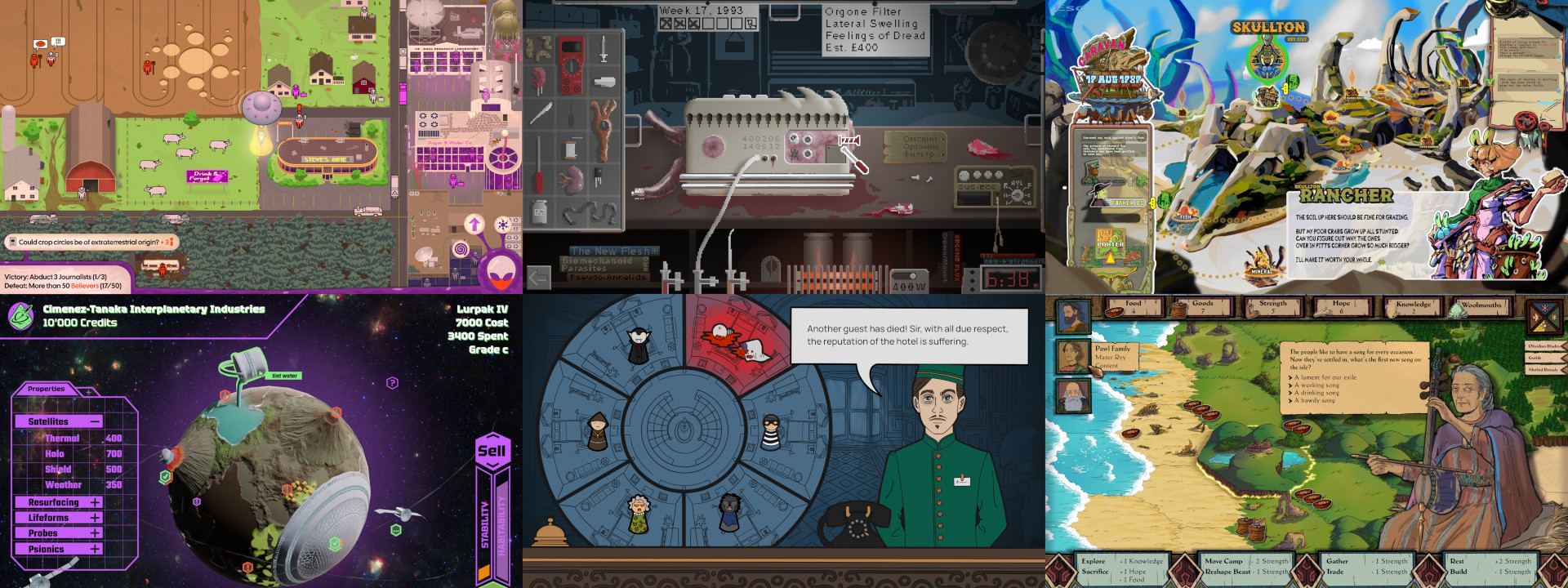
So we would create mockup screenshots for each game: single images showing what the game could look like. I created two of them myself and worked with collaborators and freelancers on the others:
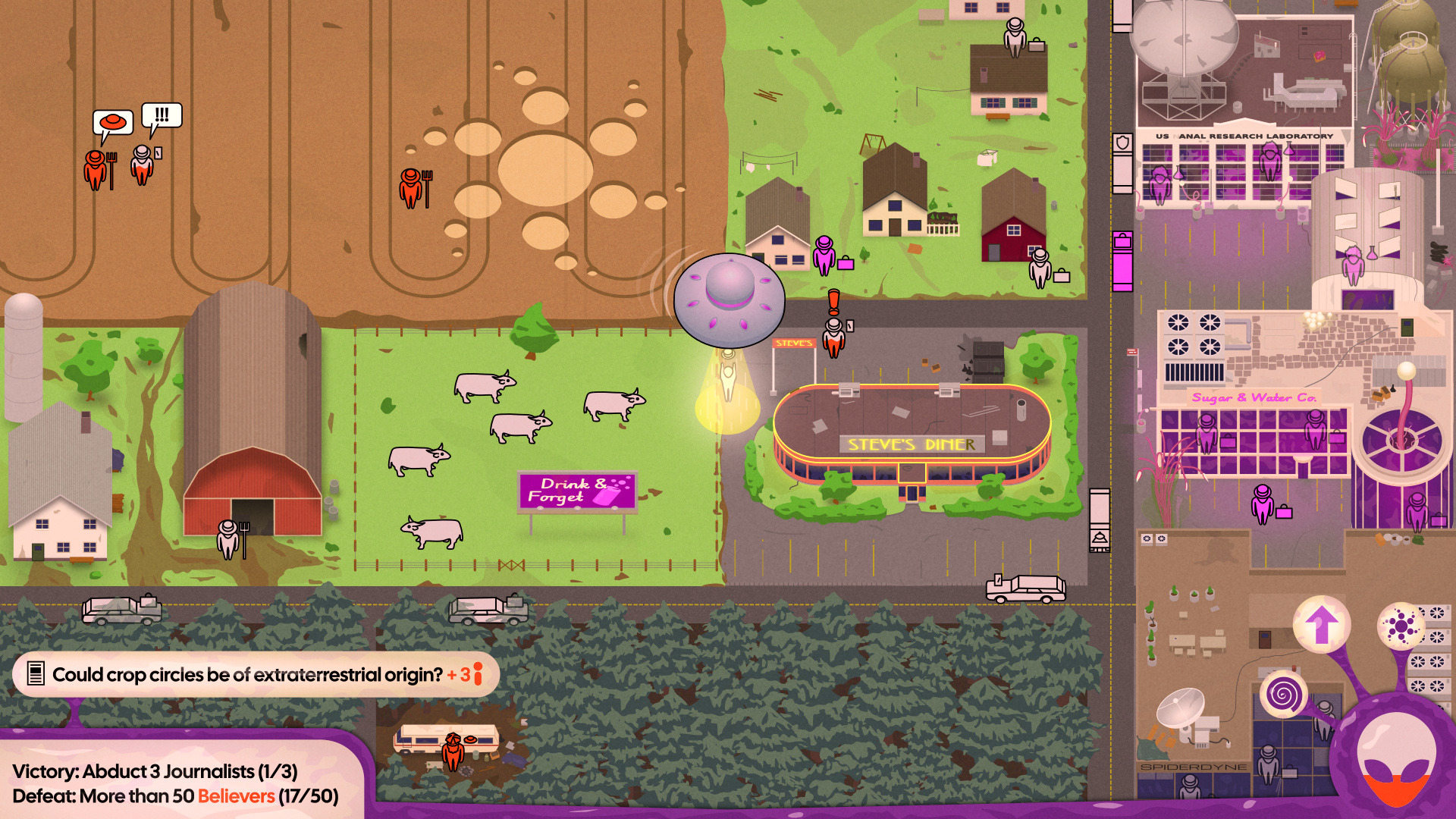
UFO: Enslave Mankind (me)
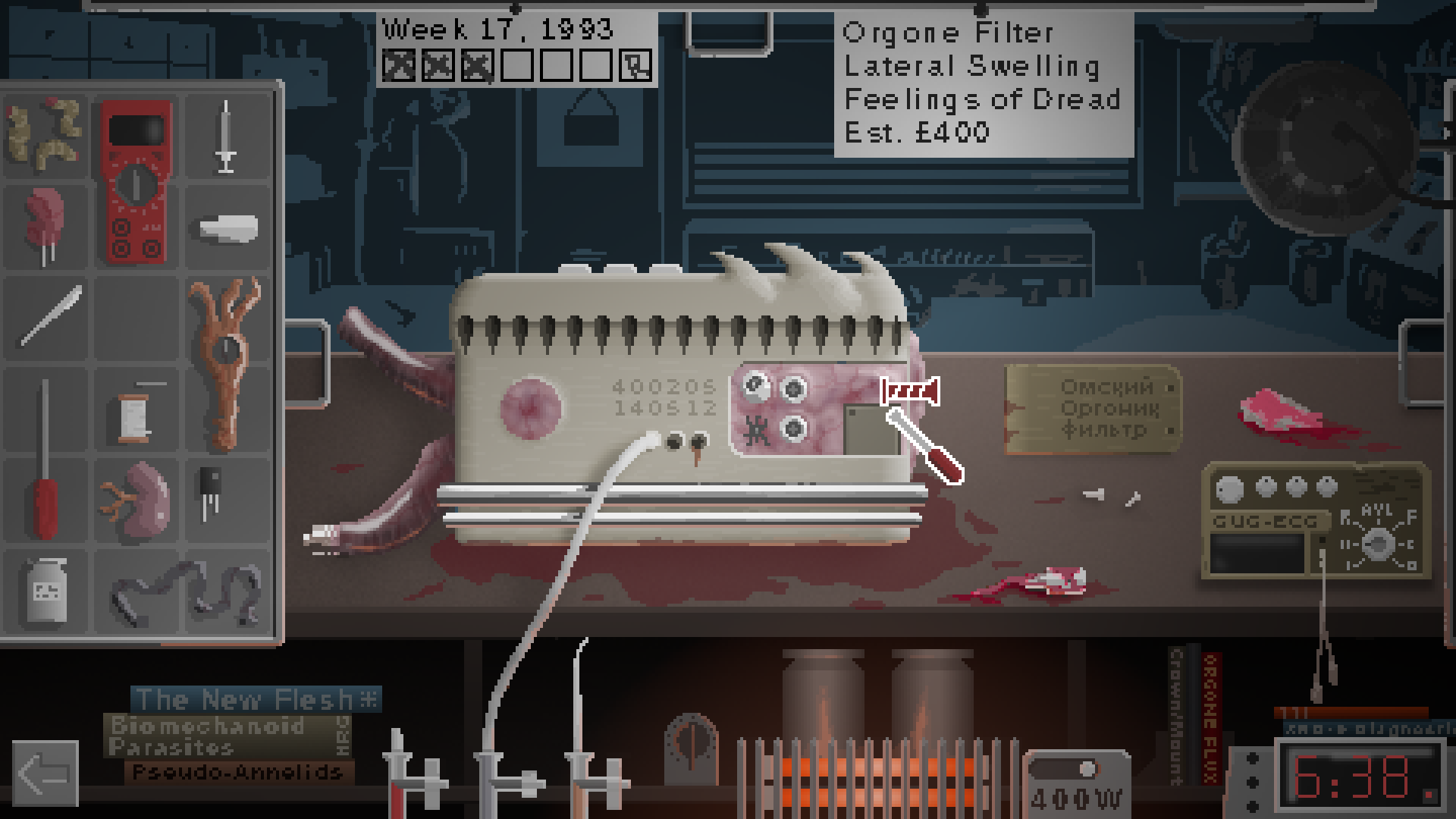
Biomechanoid Repair Shop (me)
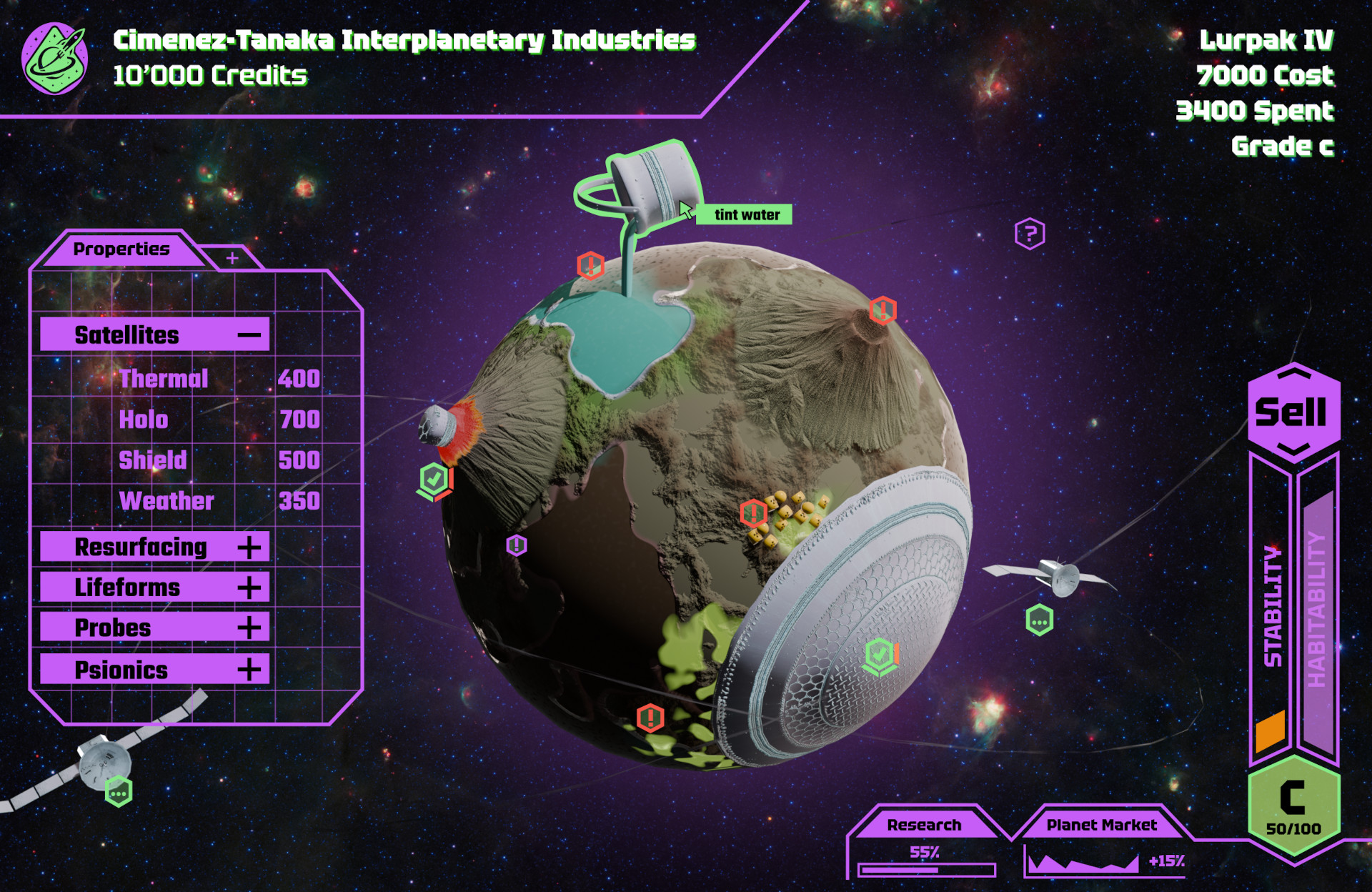
Planet Flipper (Denise Hohl)
Airships: Murder on the Sky Express (Nathalie Weidmann, Metaroot)
Bonescape (Yoel Arcenio / lemonbo0y)
Isle of Beasts (Cristy Gugliotta)
Some of these games had in-depth prototypes, while others were only vague concepts and vibes at this point. Each mockup required a lot of up-front game and visual design to figure out what to show, and how the game would work. I would estimate at least 30 hours of work per mockup.
Posting Mockups
The plan: post each mockup on social media with a link to a landing page with an email list signup. The email list was to measure interest: it's easy to upvote or repost something, but giving out your email address represents a more serious commitment. This would hopefully give me fairly hard numbers I could use to gauge which mockup created the most interest.
Of course the amount of base visibility for each post would have to be roughly the same, so I enlisted some friends on Twitter, Bluesky and Mastodon to repost all six posts, to consistently boost their reach.
Metaroot posted each mockup to around ten subreddits picked to be suitable to the topic. For example, Biomechanoid Repair Shop got the cyberpunk subreddit and Airships: Murder on the Sky Express got the Agatha Christie one.
We also chose this approach to shape how people approached the posts. We wanted viewers to evaluate them as real games, not as concepts. I was afraid of people being too nice to me. I didn't want "Oh this person is making a game, how nice for them", I wanted harsh gamer "Does this interest me, do I want to buy this?"
So I didn't mention that these were mockups. I didn't claim that they were screenshots, I stated that these were "games I was working on". Not a lie but intended to give a certain impression. For the same reason, we spaced out posting the mockups by at least a week. I didn't want people in a mode where they were picking one idea from a set.
Results
After about two months of work and posting we had the results:
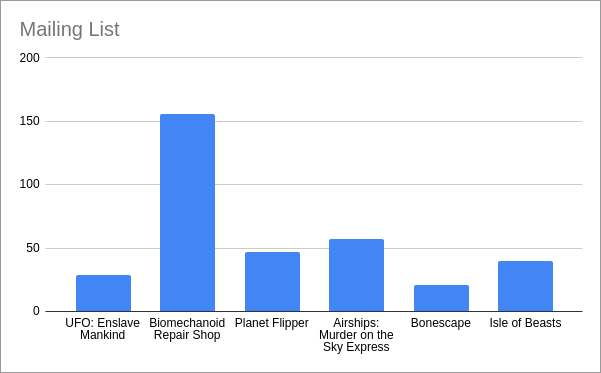
The clear winner is Biomechanoid Repair Shop, with around triple the signups compared to the runner up. Bonescape did the worst, which made me sad because I think the art is amazing, but then I think all the art made by my collaborators is amazing.
The main driver of mailing list signups was Reddit. None of the mockups "went viral" or anything near it on Twitter/Bluesky/Mastodon. It's not clear to me if that's a thing very much anymore with the fragmentation of microblogging social media. The three services also had roughly the same amount of reach.
These are still fairly small numbers and luck definitely played a role in the results. Still, I think the mailing list signups are a useful signal. I also posted a screenshot of a jam game I made in the same way, and it got zero signups, which confirms that people don't just hand out their email addresses for funsies.
Biomechanoid Repair Shop did really well in part because it clicked with the cyberpunk and cassette futurism subreddits. Other games didn't have subreddits that so neatly fit with the idea and aesthetics.
One interesting thing I noticed: mockups with a clear visual center did better. Biomechanoid Repair Shop and Planet Flipper have a single central object, and Airships: Murder on the Sky Express has the cleanest visual style.
In comparison, I put a lot of elements into UFO: Enslave Mankind, hoping to communicate that it was a deep game, but the result is visual confusion. Bonescape has an unusual and busy visual style, and Isle of Beasts is also a strategy game with lots of detail and hence less of a clear focus. So games that are map-based did worse.
I also noticed by accident, while showing the mockups to my partner on the phone, that if you view them at postage stamp size and upside-down, the three that did better are still visually understandable and the others are just noise:

This doesn't mean that a game needs to pass this test to be successful. look at e.g. Rimworld, a very successful indie game, which clearly doesn't. Rather, this is a feature and limitation of this process: we're testing for games with immediate visual interest.
None of this is a guarantee of commercial success. Maybe in two years I'll be writing a follow-up post explaining how this whole process was flawed and misleading. Maybe I'll get lucky or unlucky. But this is a good foundation to build on. Given the choice, I'd rather have a game that instantly clicks with people.
Conclusion
So for now I'm very satisfied with the results and I've started working on Biomechanoid Repair Shop. I've archived away all the mailing list signups for the other projects. If you signed up to get news for one project I will not betray your trust by adding you to the list for something else.
Finally, I hope you found this useful. You don't have to do a process this exhaustive, and probably shouldn't. This was very expensive and time-consuming and took months. You also should not conclude from this that you can do this on the cheap. If posting this leads to a wave of devs spamming random subreddits with AI slop mockups to "gauge traction" I will find and flense every single one of them. Instead, use the process I described and the numbers I shared as a baseline for your own validation.
Hey, and you should join the Biomechanoid Repair Shop mailing list!